
How to Eat Out Without Gaining Weight: 8 Practical Tips

Eating out does not have to derail your weight-management goals.
Restaurant meals, work lunches, family dinners, and social occasions can all fit into a healthy eating pattern. The goal is not to find a mythical restaurant meal that is guaranteed to be “weight-loss friendly.” Instead, focus on the overall combination of food choices, portions, drinks, sauces, frequency, and your eating habits over time.
Portion size matters as well as food quality. Restaurant servings can sometimes contain more food than one person needs for a single meal, and consistently consuming more energy than your body uses may contribute to weight gain over time.
Here is how to eat out without gaining weight while still enjoying the experience.
Why Can Eating Out Make Weight Management Harder?
Eating at a restaurant does not automatically cause weight gain.
However, several features of restaurant meals can make it easier to consume more energy than you intended.
Large portions, fried foods, calorie-dense sauces, sugary drinks, appetizers, alcohol, and desserts can all contribute to the total energy content of a meal.
A systematic review has also found that eating food prepared outside the home was associated with higher overall energy and fat intake, although the observational evidence does not prove that dining out directly causes weight gain in every individual.
Instead of labelling restaurants as “bad,” it is more useful to develop a few practical habits that work in different situations.
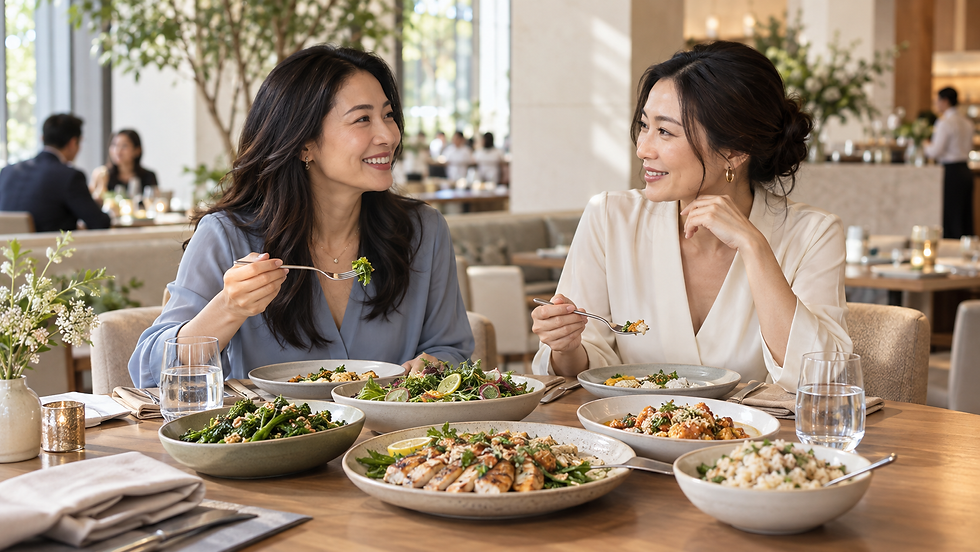
How to Eat Out Without Gaining Weight: 8 Strategies
1. Do Not Starve Yourself Before Dinner
If you know you are going out for dinner, skipping breakfast or lunch to “save calories” can backfire.
Arriving extremely hungry may make it harder to slow down and judge how much food you actually want.
NIDDK notes that skipping or delaying meals may lead to greater hunger and overeating later.
If dinner will be much later than usual, a small snack containing protein or fiber may be more practical than going into the meal ravenous.
2. Build the Meal Around Protein and Vegetables
Rather than starting with a list of foods you cannot have, look at what the meal includes.
A balanced restaurant meal might contain a source of protein such as fish, chicken, eggs, tofu, legumes, seafood, or lean meat, plus vegetables and a carbohydrate source that suits your appetite.
CDC guidance emphasizes varied protein foods, vegetables, fruits, and fiber-rich whole grains while limiting excessive amounts of saturated fat and added sugars.
There is usually no need to eliminate rice, pasta, bread, or potatoes completely. Portion and overall meal composition matter more than treating one carbohydrate source as inherently fattening.
3. Pay Attention to Cooking Methods
The same basic food can have a very different energy content depending on how it is prepared.
When available, consider choosing foods that are grilled, baked, steamed, roasted, or broiled more often than heavily breaded or deep-fried options.
Both CDC and NIDDK include these cooking methods among their recommendations for making lighter restaurant choices.
That does not mean fried food must disappear from your life. If you eat out frequently, simply choosing less energy-dense preparations more often can make your overall pattern easier to manage.
4. Get Sauces and Dressings on the Side
Calories do not only come from the main ingredients.
Creamy dressings, mayonnaise, cheese sauces, oils, sweet glazes, and rich dips can substantially change a meal.
A simple strategy is to ask for sauces or dressing on the side. This lets you use enough for flavor without automatically consuming the entire portion served.
CDC and NIDDK specifically recommend requesting sauces and dressings on the side as a way to control how much is used.
5. Separate the Restaurant Portion From the Portion You Need
A restaurant serving is not a requirement to finish everything on the plate.
If a meal is especially large, consider splitting it with someone, ordering a smaller portion, or saving part of it for later.
CDC and NIDDK both recommend sharing large restaurant meals or setting aside part of the meal when portions are larger than needed.
You can also simply stop when you are comfortably satisfied, even when food remains.
6. Remember That Drinks Count Too
Sweetened coffee drinks, soda, sweet tea, shakes, and other sugary beverages can add a meaningful amount of energy to a restaurant meal.
If the drink is not an important part of the experience for you, water, sparkling water, or unsweetened tea or coffee may be easier everyday options.
If you do want a sweet drink, you do not have to ban it. A smaller size or less-sweet version may fit your overall eating pattern more comfortably.
7. Dessert Does Not Have to Be All or Nothing
A sustainable eating pattern should leave some room for foods you enjoy.
If you want dessert, have dessert.
You might choose a smaller serving, share one with the table, or eat slowly and stop once you feel satisfied.
NIDDK notes that small portions of higher-calorie foods can still fit occasionally within an overall weight-management approach.
The goal is flexibility rather than perfection.
8. Slow Down Enough to Notice Fullness
Restaurants provide plenty of distractions: conversation, shared plates, music, drinks, and multiple courses.
It is easy to continue eating simply because food remains in front of you.
Slowing down, chewing normally, pausing between bites, and checking how hungry you still feel can make it easier to notice when you have had enough.
NIDDK recommends eating more slowly and paying attention to the meal rather than eating while distracted.
You do not have to reach the point of feeling uncomfortably full before stopping.

Practical Choices at Different Restaurants
The exact meal does not matter as much as applying the same principles consistently.
Asian Restaurants
Choose a combination of vegetables, protein, rice or noodles, and dishes prepared with lighter cooking methods when possible.
You can still order fried dishes or rich curries. If several people are sharing, consider balancing those dishes with steamed, grilled, broth-based, or vegetable dishes.
Japanese Restaurants
Fish, sashimi, tofu, soup, vegetables, rice, and sushi can all fit comfortably into a balanced meal.
Pay additional attention to heavily fried items, large amounts of mayonnaise, and sweet sauces if you are trying to moderate the total energy content.
Steakhouses and Western Restaurants
A grilled protein with vegetables and your preferred carbohydrate side can be a simple foundation.
Ask for rich sauces or salad dressing on the side when useful.
Fast-Casual Restaurants
Build-your-own meals can make portion management easier.
Start with protein and vegetables, then add rice, bread, noodles, cheese, sauces, or other toppings in amounts that fit your hunger instead of automatically adding every available option.
What If You Eat More Than Planned?
You do not need to “compensate” by starving yourself the next day.
One large restaurant meal does not determine your long-term body weight.
Return to your usual eating pattern at the next meal, choose nutritious foods you enjoy, stay normally active, and continue with your routine.
Extreme restriction after overeating may simply leave you excessively hungry later.
Do You Need to Count Calories Every Time You Eat Out?
Not necessarily.
When restaurants provide calorie information, it can be a useful reference for comparing menu items. NIDDK includes menu calorie information as one possible tool for managing restaurant portions.
But calorie counting is not required for everyone.
You can also make useful decisions based on portion size, cooking method, meal composition, drinks, sauces, and your own hunger and fullness cues.
People with diabetes, kidney disease, cardiovascular conditions, food allergies, or other medical nutrition requirements may need more individualized restaurant strategies from their physician or registered dietitian.
Frequently Asked Questions
Can I eat at restaurants every day and still manage my weight?
Possibly. Frequency alone does not determine whether your weight changes.
Your overall energy intake, portions, food choices, activity, sleep, and individual physiology all matter.
If you eat out often, developing consistent habits around portion size, cooking methods, drinks, and sauces is likely more useful than trying to identify one perfect “diet meal.”
Can I eat at a buffet while trying to lose weight?
You can, although buffets make portion control more difficult. NIDDK recommends avoiding all-you-can-eat buffets when tighter portion management is the goal.
If you do go, take modest servings, eat slowly, and prioritize foods you genuinely want rather than eating more simply to get maximum value from the buffet.
Does eating dinner late make you gain weight?
Body-weight regulation is more complex than the clock time of one meal.
Overall dietary intake and multiple lifestyle and physiological factors matter. There is generally no need to remove carbohydrates from dinner solely because it is evening.
How can I handle frequent work dinners or social meals?
Planning helps.
Look at the menu before you arrive, eat normally earlier in the day rather than starving yourself, and decide which parts of the meal matter most to you.
CDC specifically recommends reviewing restaurant menus ahead of time so you can identify options before you are rushed or surrounded by competing choices.
The Bottom Line
Learning how to eat out without gaining weight is less about finding the lowest-calorie item on every menu and more about building habits that work repeatedly.
Prioritize a balanced meal, pay attention to portions, choose cooking methods intentionally, manage sauces and sugary drinks, enjoy desserts when you genuinely want them, and stop when you are comfortably satisfied.
You can support long-term weight management without turning every restaurant visit into a test of willpower. Avelyst - Weight & Metabolic
Vibhavadi Rangsit 32 0843569084 Line OA : @avelyst (มี@) หรือ https://lin.ee/ZhZpKEh




Comments