
5 Easy Ways to Make Your Favorite Meals Healthier Without Giving Them Up

Healthy eating doesn't have to mean replacing every favorite meal with grilled chicken and steamed vegetables.
For many people, a more realistic approach is to keep familiar foods and make a few strategic changes: adjust portions, add vegetables, choose leaner protein, use less sauce, or switch the cooking method.
The goal isn't to make every meal perfectly “clean.”
It's to create meals that are more balanced while still tasting like food you actually want to eat.
Here are five practical ways to make your favorite meals healthier without turning eating into an all-or-nothing diet.
1. Use the Half-Quarter-Quarter Plate Method
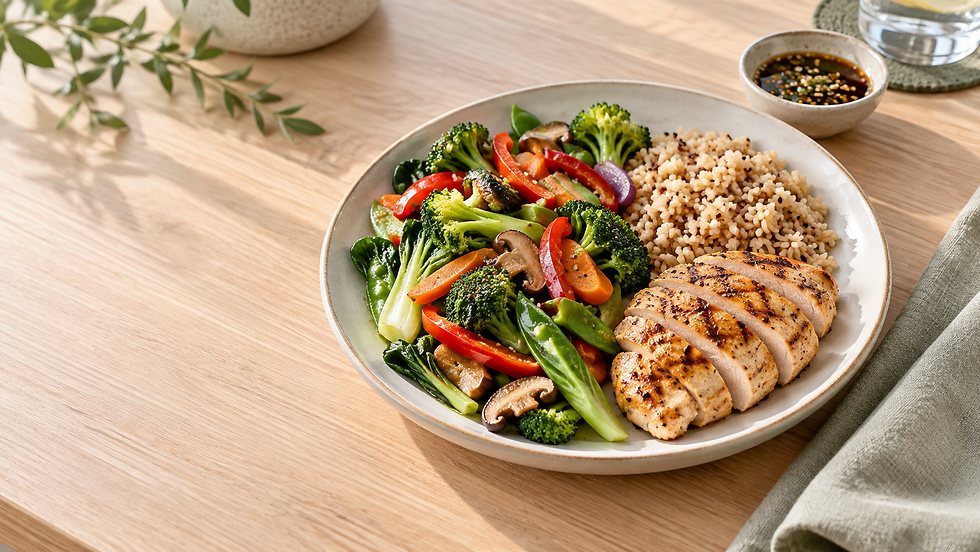
A simple visual approach is to divide your meal roughly into:
½ plate: vegetables
¼ plate: grains or another carbohydrate source
¼ plate: protein
Thailand's 2:1:1 healthy plate model follows this basic structure, while Harvard's Healthy Eating Plate similarly recommends filling about half the plate with vegetables and fruits and dividing the remaining half between whole grains and healthy protein.
This doesn't mean every meal needs to look identical.
Instead, use the proportions as a quick visual guide.
Example: pork leg rice
Rather than giving up a favorite rice dish completely, you could:
serve slightly less rice
add more vegetables
choose more lean meat and less skin or visible fat
order the sauce separately
The exact calorie difference will depend on the recipe and portion sizes, so fixed calorie claims are rarely useful for restaurant meals.
What matters is that you've changed the overall composition of the meal without replacing it with something completely different.
2. Pay Attention to Sauces and Condiments
Soy sauce, dipping sauces, seasoning sauces and other condiments can contribute substantial sodium to a meal.
The World Health Organization recommends that adults limit sodium intake to less than 2,000 mg per day, equivalent to about 5 grams of salt.
Reduced-sodium products can help, but “low sodium” doesn't mean unlimited.
Check the sodium amount per serving and consider how much you actually use.
Another easy strategy is to serve dipping sauce on the side instead of pouring it over the entire meal.
That gives you more control without removing the flavor completely.
3. Change the Cooking Method
You don't always need to change the food itself.
Sometimes changing how it's cooked makes a meaningful difference.
Instead of deep-frying, consider:
grilling
roasting
steaming
boiling
stir-frying with a measured amount of oil
air frying
Air frying generally requires much less cooking oil than deep-fat frying. Research comparing air-fried and conventionally deep-fried French fries has found substantially less fat in the air-fried product.
That doesn't make every air-fried food low calorie.
The ingredients, added oil, coating and portion size still matter.
Think of an air fryer as a useful cooking tool—not a shortcut that automatically makes every food healthy.
4. Add Protein and Vegetables to Carb-Heavy Meals
Noodles, pasta and rice dishes can easily become mostly carbohydrates with relatively little protein or vegetables.
Instead of doubling the protein automatically, aim to make the meal more balanced.
For example, add:
chicken
fish
shrimp
eggs
tofu
beans or other plant proteins
Then add vegetables and adjust the amount of noodles or rice as needed.
Protein can support fullness and help maintain body tissues and lean mass.
It can also affect the post-meal glucose response when eaten with carbohydrates. A 2024 systematic review found that adding protein to carbohydrate-containing meals can reduce post-meal glucose responses in adults without diabetes, although effects vary by protein source and health status and aren't consistent across everyone.
So rather than promising “stable blood sugar,” a better goal is simply to build a more balanced mixed meal.
5. Rethink Drinks and Dessert—Without Banning Them
Sugary drinks are one of the easiest places to make a meaningful change.
Harvard's Healthy Eating Plate recommends water as the primary drink and advises limiting sugar-sweetened beverages.
Depending on your preferences, you might switch:
sweet milk tea → less-sweet tea or unsweetened tea
regular soda → sparkling water or a sugar-free option
sweetened coffee → coffee with less syrup, sugar or cream
Dessert doesn't need to disappear either.
Some days you may want the cake you genuinely enjoy.
On other days you might choose plain yogurt with fruit, Greek yogurt and berries, or fresh fruit.
Healthy eating works better when choices are flexible rather than divided into “good” and “bad” foods
You Don't Have to Change Everything at Once
Imagine your usual meal has a large serving of rice, fatty meat, very little vegetables, plenty of sauce and a sugary drink.
You don't have to fix all five things today.
Start by adding vegetables.
Next time, order the sauce on the side.
Later, change the drink.
Then experiment with portion size or cooking methods.
Small changes can make a familiar meal more balanced without making it feel like diet food.
Both food quality and appropriate portions matter for long-term weight management.
FAQ
Do I need to follow the plate method at every meal?
No. It's a visual guide, not a rigid rule.
Meals such as soups, noodle dishes or mixed bowls may not divide neatly into sections, but you can still use the same concept by increasing vegetables and protein while keeping the carbohydrate portion appropriate.
Can I use unlimited reduced-sodium sauce?
No. Reduced-sodium sauces still contain sodium. Check the nutrition label and pay attention to serving size.
Does air frying remove all the fat?
No. It may reduce the amount of oil absorbed compared with deep frying, but fat already present in the food remains.
Do I have to stop eating dessert to lose weight?
Not necessarily.
Portion size, frequency and your overall eating pattern matter more than labeling a single food as forbidden.
The Bottom Line
To make your favorite meals healthier, you don't have to give them up.
Start with a few practical changes:
use a balanced plate structure,control sauces and condiments,choose cooking methods that use less oil,add protein and vegetables to carb-heavy meals,and adjust sugary drinks or desserts when it makes sense.
The goal isn't to eat perfectly.
It's to build a way of eating that supports your health and goals while still fitting into real life.
Avelyst - Weight & Metabolic
Vibhavadi Rangsit 32
0843569084
Line OA : @avelyst (มี@) หรือ https://lin.ee/ZhZpKEh



Comments